
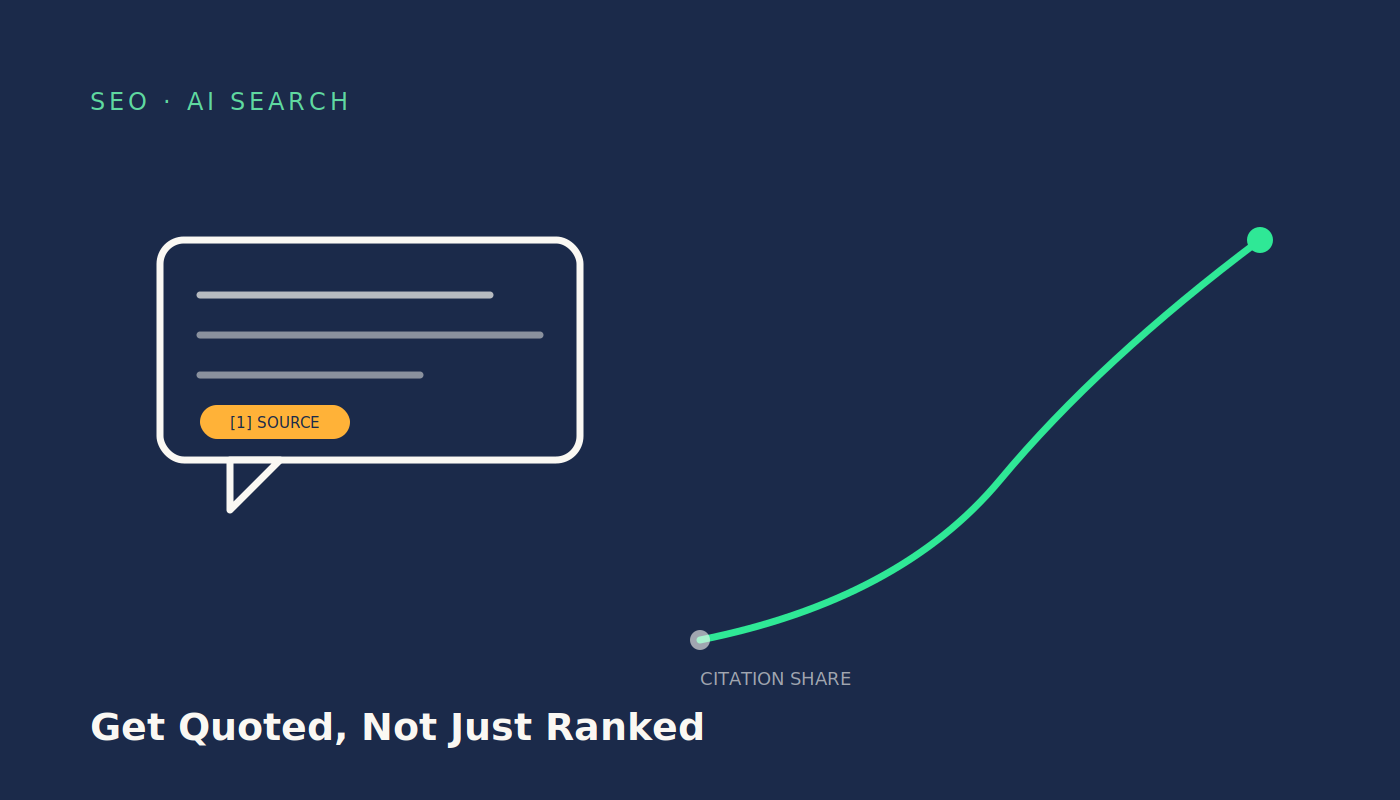
Google AI Overviews now appear in roughly half of all searches. When someone asks ChatGPT or Perplexity a question instead, there’s often no results page at all — just an answer, with a handful of sources cited or none. Ranking on page one used to be the goal. Increasingly, the goal is being one of the two or three sources an AI system actually quotes.
The uncomfortable part: research from Ahrefs analyzing 75,000 brands found that roughly 80% of sources AI platforms cite don’t appear in Google’s traditional top 10 results for the same query. This is a genuinely separate discovery system, not just a new display format for the same rankings.
Each AI engine picks sources differently
ChatGPT leans on its training data first and only searches the web when it detects the question needs current information — when it does cite sources, it tends to favor high-authority, well-established sites. Perplexity is the opposite: it searches live every time and always cites, weighting freshness heavily enough that a large share of what it cites was published or updated within the past year. Google’s AI Overviews mostly pull from pages already ranking in the top 20 organic results, so traditional SEO still matters there even though it doesn’t for the others.
That mismatch matters practically: optimizing only for Google’s AI Overviews won’t help you with ChatGPT or Perplexity, and the reverse is also true.
What actually correlates with getting cited
A few patterns show up consistently across the research on this:
- Clear, structured answers near the top of the page — an AI system extracting an answer needs a self-contained paragraph, not three paragraphs of preamble before the actual point
- Schema markup (Article, Organization, FAQPage) so the content’s structure is machine-readable, not just visually clear to a human
- Content that’s crawlable in plain HTML, not hidden behind JavaScript a crawler may never render
- Third-party mentions on Reddit, Quora, G2, and industry directories — AI systems treat these as independent validation, not just your own claims about yourself
- YouTube presence — in the Ahrefs study, YouTube mentions had the single highest correlation with AI visibility across every platform tested, ahead of traditional backlinks
The compounding effect of internal linking
Sites with dense internal linking — where new content references existing, related posts rather than sitting in isolation — get cited more often. This isn’t just good SEO practice; it’s a signal AI systems use to judge whether a domain is a genuine knowledge hub or a collection of disconnected pages. Every new piece of content should link back to a few existing, relevant posts, and vice versa.
FAQ
Does this replace traditional SEO? No — Google’s AI Overviews still draw heavily from standard organic rankings, so ranking well the traditional way still matters. It’s an addition, not a replacement, and the other engines (ChatGPT, Perplexity) reward a partly different set of signals.
How long does it take to start getting cited? There’s no fixed timeline, but freshness matters more here than in traditional SEO — Perplexity in particular favors recently published or updated content, so consistency matters more than a single well-optimized page.
Is this worth it for a small business, or only large brands? The Ahrefs finding that 80% of AI citations don’t overlap with Google’s top 10 actually favors smaller, well-structured sites — being outranked on traditional SEO doesn’t mean being invisible to AI search.
This entire post follows the structure it describes — direct answers, clear headers, cited data. Ratnawat Global builds SEO and analytics work with this same AI-search visibility in mind, not just traditional rankings. Get in touch if your content isn’t showing up where your buyers are actually looking.